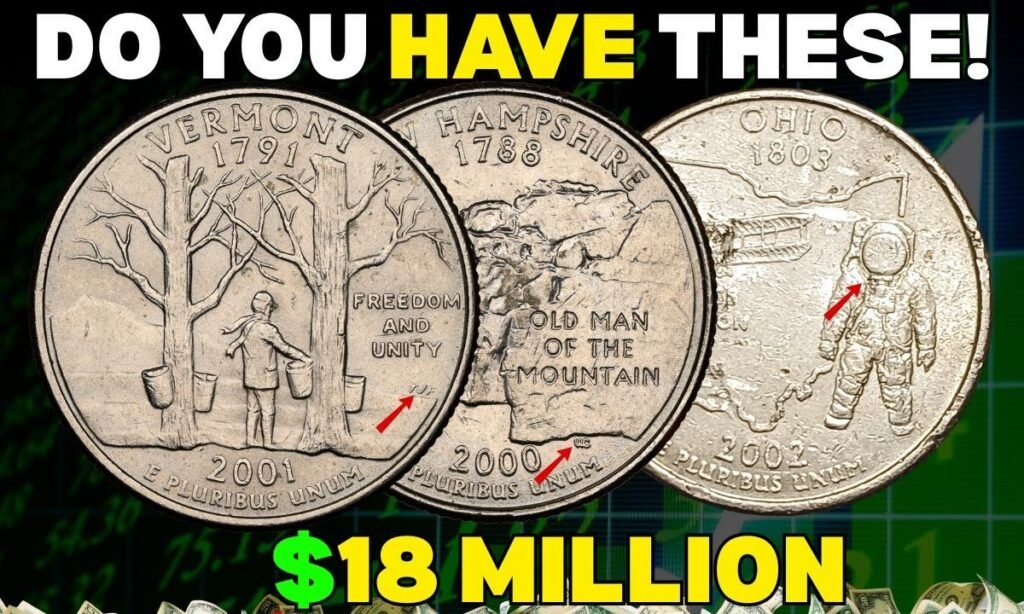
The 50 State Quarters program, which ran from 1999 to 2008, turned everyday pocket change into a nationwide collecting craze. While billions of these coins were minted and most still carry just their face value of 25 cents, a small number stand out due to minting mistakes, unusual varieties, or exceptional preservation. In 2026, these rare pieces continue to draw serious attention from collectors, with some fetching hundreds or even thousands of dollars at auctions and sales. Digging through your loose change or old jars could uncover a hidden gem worth far more than you expect.
Why Some State Quarters Became Highly Valuable
The U.S. Mint produced these quarters to honor each state’s unique history, landmarks, or symbols, releasing five designs per year. The program succeeded wildly in sparking interest, but it also created opportunities for errors during high-volume production. Minor flaws that slipped through quality checks—such as doubled lettering, extra design elements, or unusual strikes—turned ordinary coins into sought-after rarities. Pristine examples that avoided circulation wear also command premiums today, as collectors prize sharp details and original luster.
The Role of Minting Errors in Driving Up Prices
Errors happen when dies wear out, planchets shift, or dies clash improperly during striking. These accidents are unpredictable and limited in number, making affected coins scarce. Over time, as more people learned to spot them through online guides and collector communities, demand grew steadily. What started as curiosities now represent real investment potential for those who find or hold them in top condition.
Here are some of the standout error types that boost value:
- Doubled die varieties, where design elements like letters or images appear duplicated
- Extra design additions, such as unintended leaves or spikes on plants
- Die cracks or breaks that create raised lines or odd features
- Broadstrikes or off-center hits that alter the coin’s shape
Top Rare State Quarters to Hunt For in 2026
Several specific issues from the series consistently top lists for potential big payouts. These stand out because of documented varieties that collectors actively seek.
The 2004-D Wisconsin Extra Leaf quarter remains one of the most famous. An extra leaf appeared on the corn stalk—some call it the “high leaf” version, others the “low leaf”—due to an over-polished or altered die. Circulated examples often sell for $50 or more, while pristine ones have reached $1,000 or higher in recent years.
Another favorite is the 1999-P Delaware Spitting Horse variety. A die crack created a raised line from the horse’s mouth, giving the appearance of spitting. Worn pieces trade for around $10 to $25, but sharper examples fetch $300 or more.
The 2005 Minnesota doubled die quarters show extra trees or doubled elements in the design. Dramatic versions can bring $50 to several hundred dollars depending on clarity and condition.
- 2004-D Wisconsin Extra Leaf (high or low varieties) — prized for the unexpected addition to the corn stalk
- 1999-P Delaware Spitting Horse — famous for the odd line from the horse’s mouth
- 2005 Minnesota Extra Tree varieties — noticeable doubling in the landscape elements
- 1999-P Connecticut Broadstruck — wide, misshapen strike from a mint error
How Condition and Certification Affect Value
Even among rare varieties, condition makes a huge difference. Coins that spent years in circulation show wear, scratches, or toning that lowers appeal. Uncirculated pieces with full details and no marks stand out dramatically. Professional grading services evaluate and encapsulate these coins, confirming authenticity and condition, which often pushes prices higher. A certified high-grade example of a popular error can multiply its value several times over compared to a raw coin.
What to Do If You Think You’ve Found One
If a quarter catches your eye for an unusual feature, handle it carefully by the edges to avoid adding fingerprints or damage. Compare it against clear photos from reliable collector resources. Many online marketplaces and auction sites show recent sales to give a sense of current worth. For anything that looks promising, consider professional appraisal or grading to confirm details and maximize potential returns.
The state quarters era may be long over, but its surprises keep turning up in everyday places. With collector interest holding strong in 2026, taking a quick look through your change remains a low-effort way to possibly discover something valuable. One overlooked coin could turn out to be a small fortune waiting to be claimed.
FAQs
What makes a state quarter rare enough to sell for big money?
Minting errors, low surviving numbers in top condition, or specific varieties like extra design elements create scarcity that drives collector demand.
Are all state quarters from 1999-2008 potentially valuable?
No—most remain worth only 25 cents. Value comes from specific errors or exceptional preservation, not just the series itself.
How can I tell if my quarter has a valuable error?
Look closely for doubled letters, extra features (like leaves or trees), odd lines from die cracks, or unusual shapes. Use a magnifying glass and compare to known examples online.
Does the mint mark matter for value?
Yes, in some cases. “D” for Denver or “P” for Philadelphia can influence rarity, and “S” proof coins from San Francisco often carry higher premiums due to better strikes.
Where can I sell a rare state quarter if I find one?
Online auction platforms, coin dealers, or shows are common options. Getting it graded first usually helps achieve the best price from serious buyers.