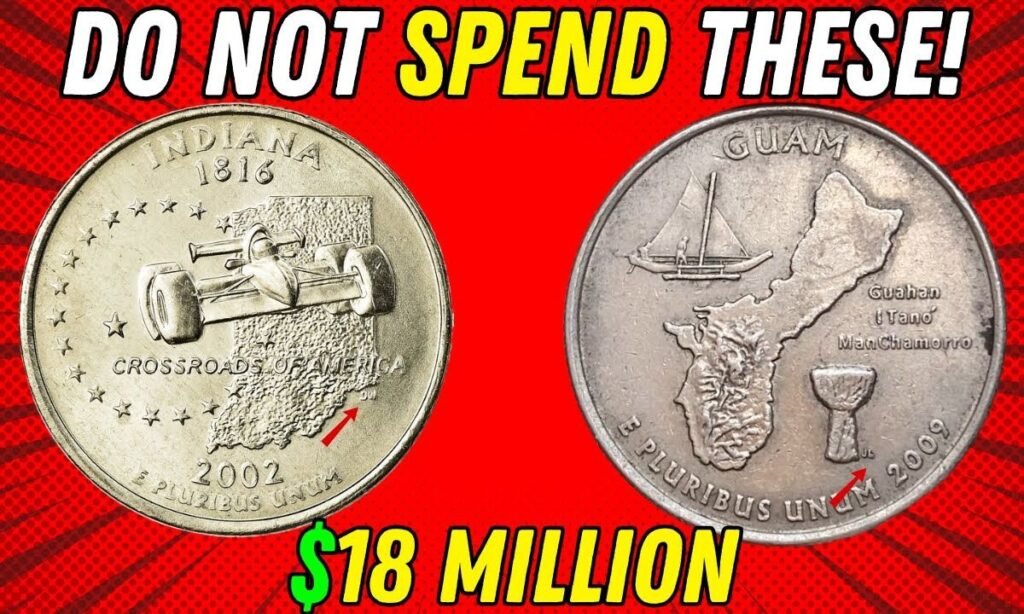
The 50 State Quarters program, which ran from 1999 to 2008, sparked widespread interest in coin collecting across the country. While billions of these quarters entered circulation and most remain worth only their face value of 25 cents, a small number of extremely rare examples have fetched astonishing prices at auctions and private sales. In 2026, collector enthusiasm remains strong, with certain error coins, pristine high-grade specimens, and unusual varieties commanding values that reach into the thousands—and in the most exceptional cases, claims of millions for legendary pieces or collections.
The Appeal of State Quarters Today
What began as a fun way to learn about state history has evolved into a serious market. Millions of people tucked these coins away in albums or jars, hoping one might turn out special. Now, with grading services like PCGS assigning top marks to flawless examples and errors drawing attention from serious buyers, some quarters have become prized possessions. The combination of nostalgia, scarcity, and condition drives prices higher each year.
Why Some Quarters Become Extremely Valuable
Most state quarters were minted in huge quantities, often hundreds of millions per design. Value spikes when something goes wrong during production or when a coin survives in near-perfect shape. Minting mistakes create one-of-a-kind pieces, while ultra-high grades like MS69 or MS70 are incredibly tough to achieve on coins meant for everyday use. Demand from collectors pushes these rarities far beyond face value.
Standout Rare Varieties and Errors
Certain state quarters stand out because of well-known defects or exceptional preservation. These tend to attract the highest bids when they come up for sale.
Here are some of the most talked-about examples:
- The 2004-D Wisconsin “Extra Leaf” quarter, featuring an unexpected extra leaf on the corn stalk, with high and low versions recognized by collectors.
- The 2005-P Minnesota quarter showing doubled dies or an extra tree element in the landscape design.
- The 1999 Delaware “Spitting Horse” variety, where a die crack creates the illusion of the horse spitting.
- High-grade pristine examples, such as 2000-P South Carolina or 2008-D Alaska quarters graded MS69, which have sold for thousands due to their flawless appearance.
These varieties often sell for hundreds to several thousand dollars depending on how dramatic the error appears and the coin’s overall condition.
Factors That Drive Million-Dollar Potential
While individual state quarters rarely reach millions on their own, extraordinary circumstances can lead to headline-grabbing figures. Unique off-metal strikes, wrong planchet errors, or one-of-a-kind transitional pieces sometimes achieve six-figure results. In some reports, the cumulative value of the most legendary state quarter specimens across major auctions has been described as exceeding $21 million when combining top sales. Pristine proof versions or those struck on experimental planchets add to the intrigue, as do coins that represent first-year issues or low-mintage varieties from the program’s later years. The market rewards patience, as values can climb when fresh examples surface or when collector interest peaks.
Tips for Checking Your Own Coins
Dig through old jars, albums, or change drawers from the late 1990s and 2000s. Look closely at the reverse designs for anything unusual, like extra elements, doubling, cracks, or odd shapes. Pay special attention to coins from Wisconsin in 2004, Minnesota in 2005, and early releases like Delaware or Pennsylvania in 1999. Even if nothing jumps out immediately, a professional grading service can confirm condition and authenticity for pieces that look promising.
The state quarters era may be long over, but its legacy lives on in collections nationwide. What started as pocket change for many has become a source of excitement and potential windfalls for a lucky few. If you’ve held onto any of these coins over the years, now could be the perfect time to take a closer look—you might be surprised at what turns up.
FAQs
Are any state quarters actually worth millions individually?
While single coins typically top out in the thousands for the rarest errors or highest grades, some reports highlight exceptional or unique specimens reaching much higher figures in private deals or when part of acclaimed collections.
What makes a state quarter rare enough to sell for big money?
Minting errors like extra leaves or doubling, combined with perfect or near-perfect condition (high MS grades), create the biggest demand. Low-mintage varieties from certain years also help.
Should I get my quarters graded if I think they’re special?
Yes, professional grading from services like PCGS or NGC can verify authenticity, condition, and variety, often increasing value significantly for buyers.
How can I tell if my quarter has an error?
Examine the design under good light and magnification. Look for extra lines, doubling on letters or images, cracks, or anything that doesn’t match standard photos of the coin.
Is it still worth collecting state quarters in 2026?
Absolutely—the hobby remains active, and values for key rarities continue to hold or rise as more people rediscover old collections.